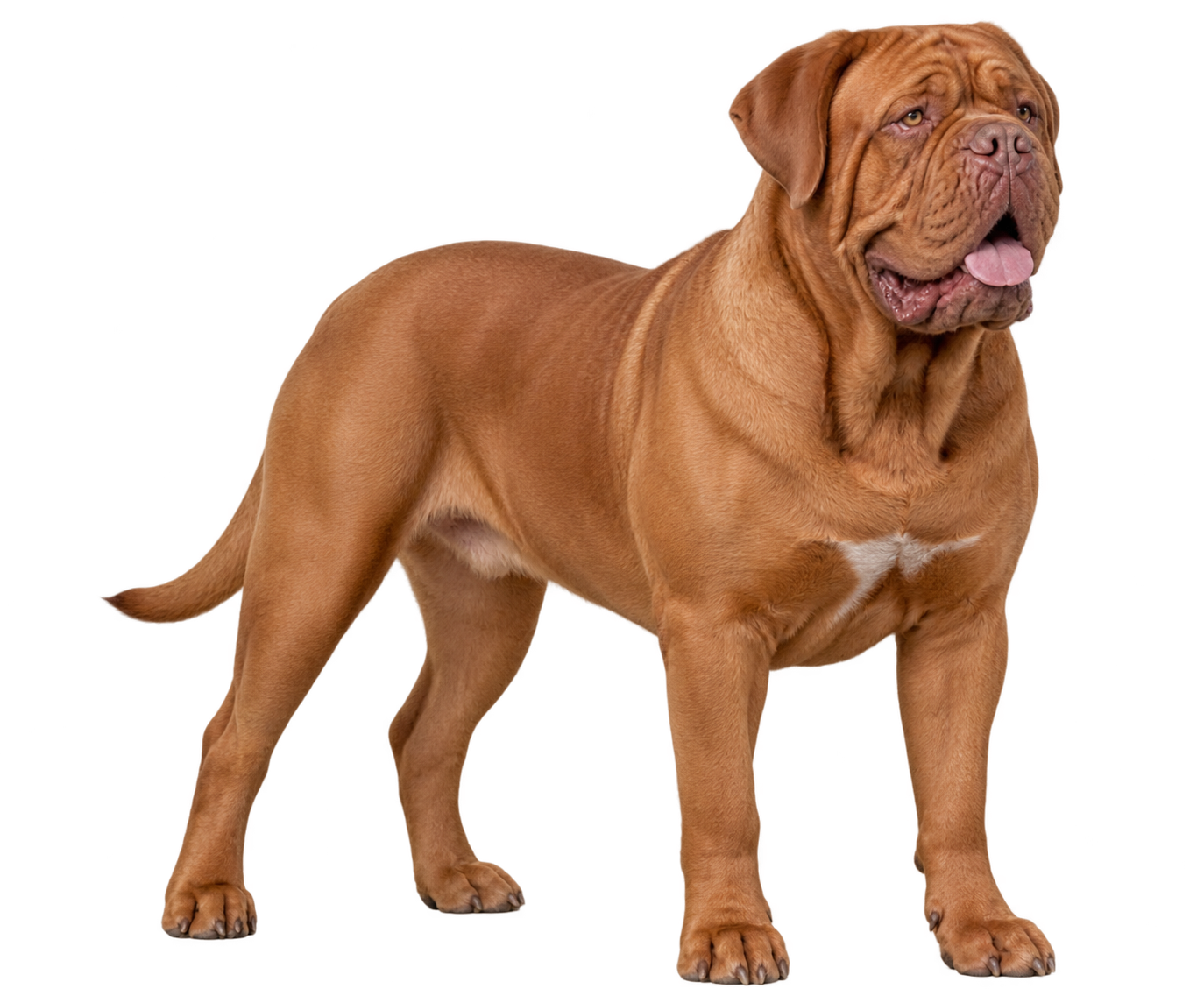
Dogue de Bordeaux
A powerful, affectionate French guardian whose size, strength, heat sensitivity, and short lifespan require experienced planning.
Open breed profile →Evidence-backed comparison
See where their everyday needs align, where they differ, and which practical trade-offs deserve a closer look.
A powerful, affectionate French guardian whose size, strength, heat sensitivity, and short lifespan require experienced planning.
Open breed profile →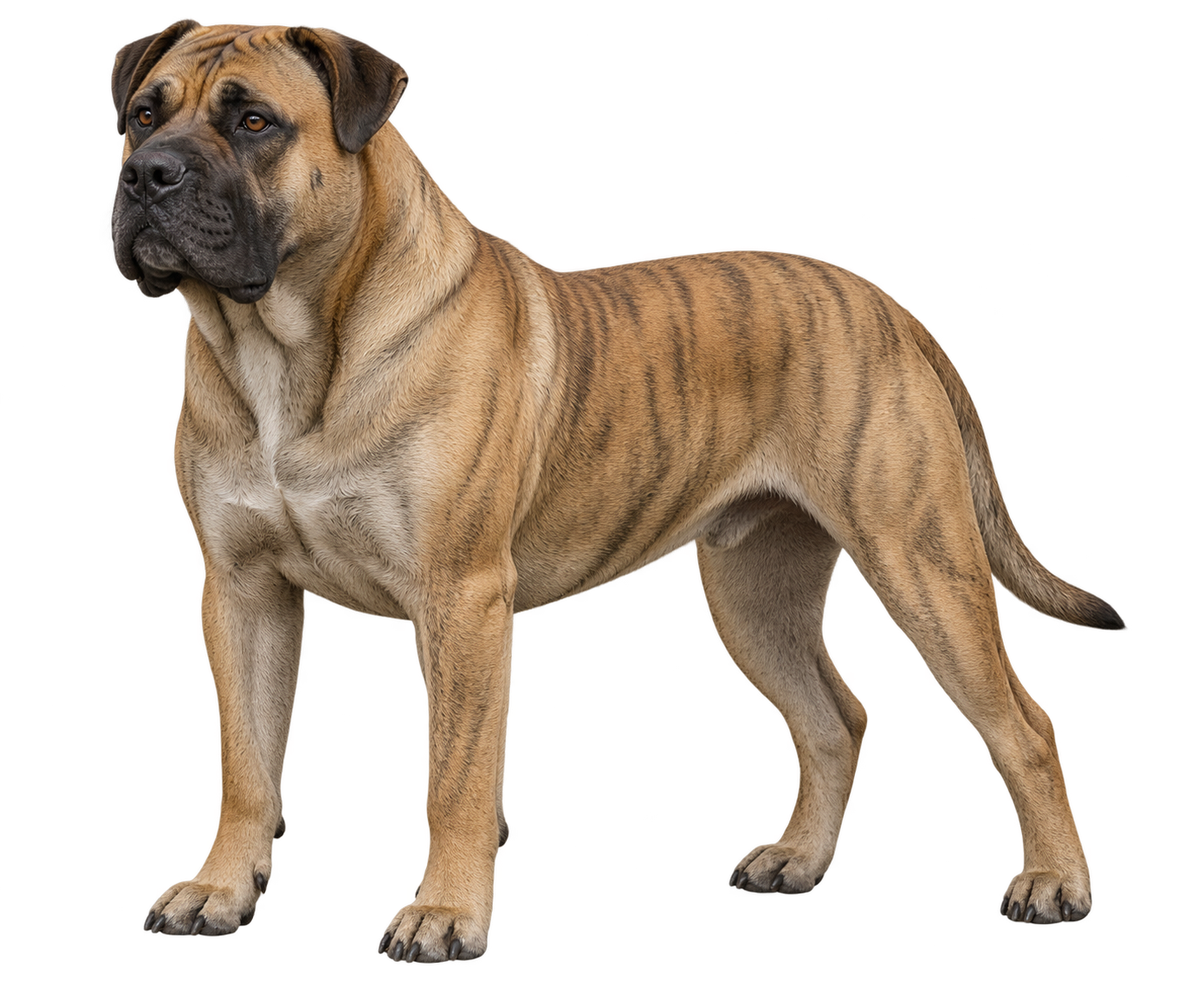
A powerful, quiet Majorcan molosser whose courage, devotion, and guard purpose call for skilled socialization and dependable physical control.
Open breed profile →The clearest contrasts
The breed is known for loyal, affectionate attachment to its household.
The standard says the breed is at ease with people and devoted to its owner, without establishing broad stranger sociability.
Common ground
Controlled daily walks and activity are preferable to sustained high-impact work.
A powerful medium molosser needs regular conditioning, while the standard emphasizes quiet composure.
Short training sessions and household engagement support this guardian breed.
Watch and guard heritage supports structured training and environmental engagement.
Calm, early reward-based training is important for a strong and self-assured dog.
Devotion to the owner supports cooperation, but guardian purpose and power require patient consistency.
Exceptional strength, guardian instincts, health constraints, and heat sensitivity require experienced planning.
Powerful build, courage, and watch-and-guard purpose require skilled socialization and physical control.
The short coat sheds but is simpler to manage than a long or dense coat.
The short rough coat implies routine coat loss without an intensive coat-care burden.
Short-coat care is limited, though facial folds and drool require regular hygiene.
The short rough coat requires straightforward routine maintenance.
Guardian watchfulness can produce alert barking without making constant voice inevitable.
Watch-and-guard function supports alerting, while quiet temperament argues against assuming constant vocality.
Before you decide
Keep exploring
See how either breed compares with another realistic alternative.
 Dogue de Bordeaux vs BullmastiffGuardian size, strength, training, heat, health, and household planning.Compare →
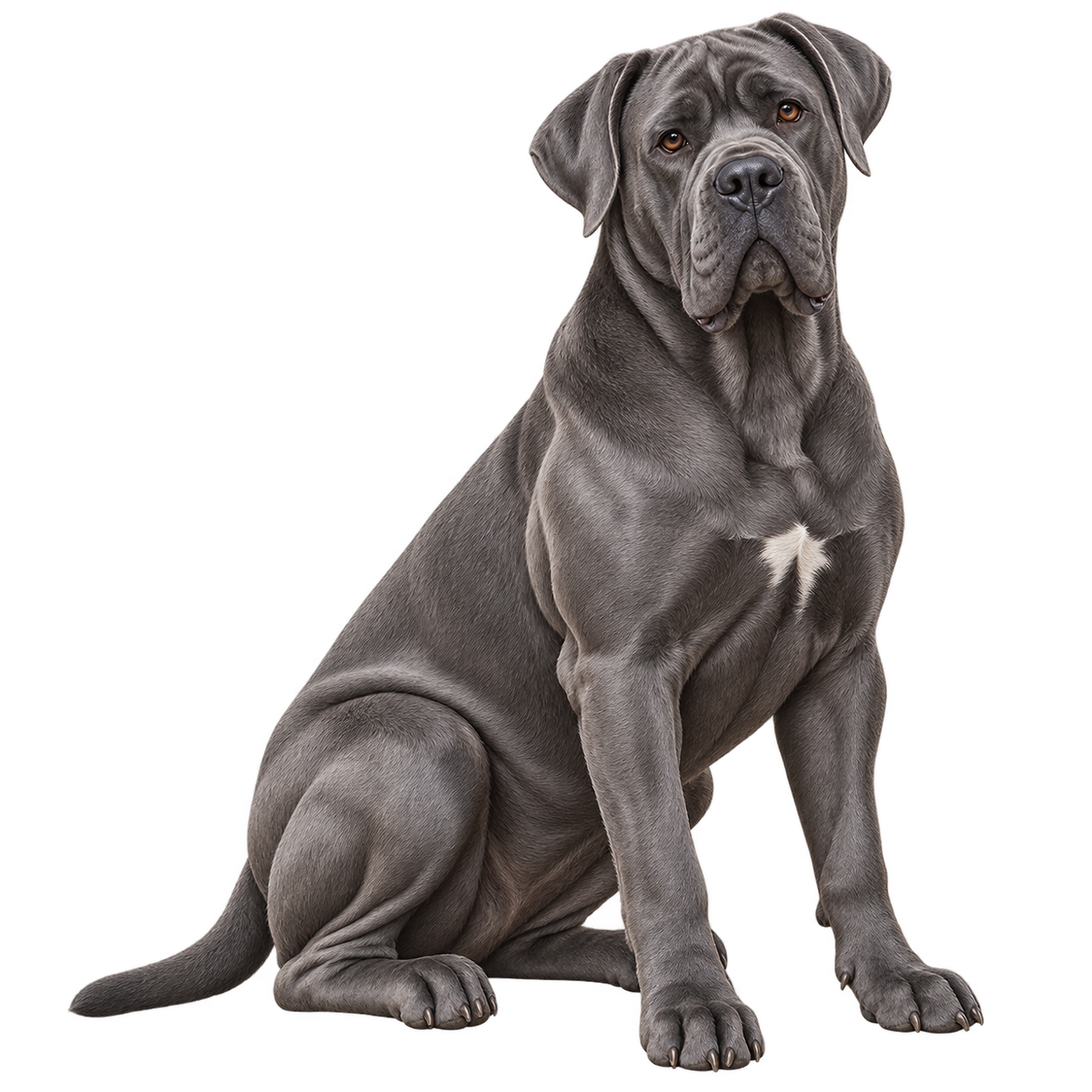 Majorca Mastiff vs Cane CorsoPowerful guardian strength, composure, socialization, trainability, exercise, coat care, and physical management.Compare →
 Akita vs Cane CorsoGuardian temperament, power, training, and household management.Compare →
Your routine matters
Breed-level tendencies are a starting point. Check them against your own time, home, and constraints.